Learn how to care for your premium jute folders. Follow these 5 simple maintenance tips to maximize their natural durability and workspace life.
Choosing a premium jute folder for your office or corporate gifting needs is a fantastic step toward creating a zero-waste workspace. Known as the "Golden Fiber," jute is celebrated across the global corporate landscape for its incredible natural tensile strength, structural resilience, and distinct eco-luxury appeal.
However, because jute is a 100% natural, organic plant fiber, it requires a completely different care routine than synthetic, petroleum-based plastic folders. If you want to protect your investment and ensure your customized portfolios remain boardroom-ready for years to come, proper maintenance is essential.
Here are 5 simple, highly effective ways to extend the lifecycle of your jute office folders.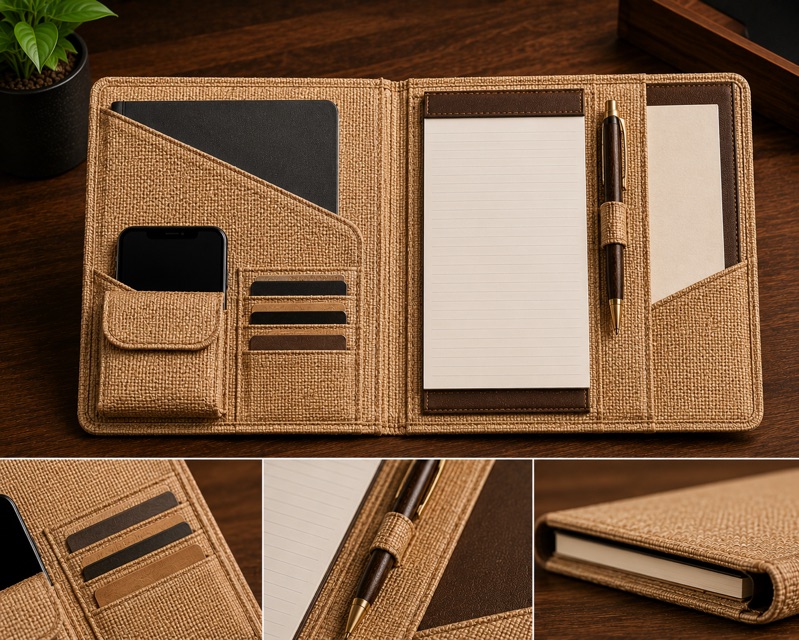
1. Shield it from Excessive Moisture
While a high-quality jute folder can easily handle a quick dash through light rain, it is fundamentally a plant-derived textile. Prolonged exposure to heavy moisture can weaken the natural cellulose fibers, causing the folder to temporarily lose its structural rigidity.
The Fix: If your folder gets damp from an accidental coffee spill or weather exposure, do not panic. Simply wipe off any excess surface liquid with a dry microfiber cloth immediately.
Drying Routine: Allow the folder to air-dry completely in a well-ventilated space. Avoid placing it directly over artificial heating vents or radiators, as extreme, sudden heat can warp the internal reinforcement boards.
2. Master the Art of Spot Cleaning
Because of jute’s uniquely coarse, woven texture, dust and dry debris can occasionally settle between the fibers over months of heavy office commuting. Dropping it into a washing machine or submerging it in water will ruin its shape and can degrade any custom branding or internal liners.
Instead, embrace spot cleaning:
Dry Dirt: Use a soft-bristled brush (like a clean tooth or garment brush) to gently sweep away loose dust along the grain of the weave.
Stains: Mix a few drops of mild, pH-neutral liquid detergent with cold water. Dip a clean sponge into the solution, wring out most of the water so it is barely damp, and gently dab the stained area. Never scrub aggressively, as this can cause the natural fibers to fray.
Looking for Industrial-Grade Office Supplies? Our line of premium jute portfolios features water-resistant canvas backings and reinforced edge-stitching to survive the toughest daily commutes.
👉 [Browse Our Heavy-Duty Jute Collection]
3. Avoid Prolonged Direct Sunlight
A little bit of natural light won't hurt, but leaving your jute folder sitting on a sunny windowsill or a hot car dashboard for days on end can cause problems. Ultraviolet (UV) rays act as a natural bleaching agent on plant matter.
Over time, intense sunlight will cause the natural golden-brown hue of the raw jute to fade. More importantly, if your folder features intricate tone-on-tone embroidery, screen-printed corporate logos, or dyed cotton interior linings, prolonged sun exposure will dull those vibrant brand colors. Keep your portfolios stored safely in your briefcase, desk drawer, or a shaded office shelf when they aren't actively in use.
[ Ideal Storage Environment ]
Shaded Desk Organizer ➔ Away from Direct UV Rays ➔ Maintained Ambient Airflow 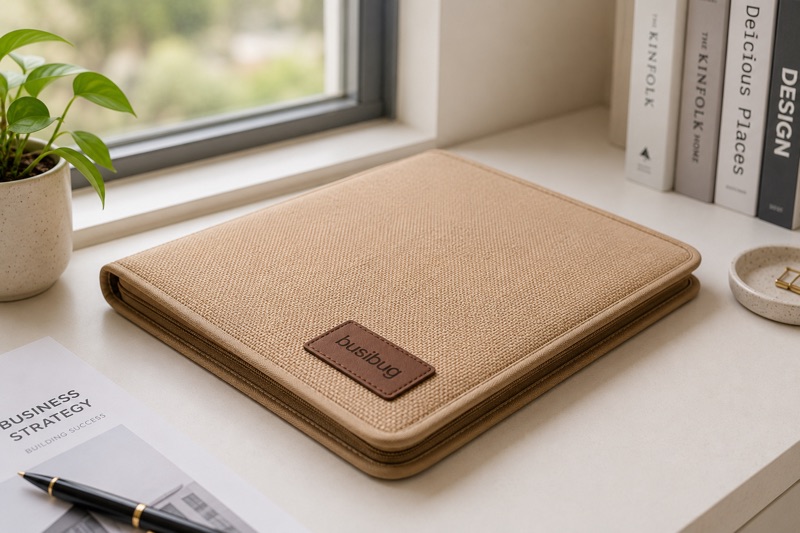 4. Be Mindful of Weight Distribution
Jute possesses a remarkably high tensile strength, meaning it can support thick legal stacks, tablets, and heavy presentation portfolios without tearing. However, stuffing a folder far beyond its designated capacity can permanently stretch the natural weave.
If your folder utilizes custom mixed-material closure mechanisms—such as vegan leather straps, magnetic snaps, or organic cotton loops—over-packing puts intense pressure on those specific stitching points. Distribute your documents evenly across the internal pockets, and use a dedicated tech sleeve if you are carrying bulky laptop chargers alongside your files.
5. Address Fraying Strunts Immediately
Over years of sliding a folder in and out of tight backpacks or laptop bags, a few tiny microscopic structural fibers might occasionally work themselves loose from the main weave. This is a entirely normal characteristic of handling raw, organic textiles.
What Not to Do: Never pull at a loose thread with your fingers, as this can inadvertently unravel a section of the woven pattern.
What to Do Instead: Use a sharp pair of fabric scissors to cleanly snip the stray fiber right at the surface of the folder. For an extra layer of professional care, you can apply a tiny drop of clear, fabric-safe textile glue to the snip point to bind the fiber tip securely back into the grid.


0 Comments