modern workplace. Explore the shift from synthetic plastics to durable, earth-toned eco-luxury.
The visual landscape of the modern corporate workspace is experiencing a profound structural transformation. The historic reliance on sterile, monochromatic office accessories—such as cold glass desks, harsh fluorescent lighting, and rows of identical plastic filing bins—is rapidly giving way to a design philosophy that prioritizes warmth, texture, and organic harmony.
As modern workplaces shift toward eco-friendly and biophilic designs, professionals are systematically auditing their daily tools. They are actively searching for organization assets that look sophisticated while remaining highly functional. Among these tools, the systems used to hold critical physical assets—document folders—have quietly taken center stage.
Once dominated by synthetic polymers, the modern executive desk is increasingly playing host to a natural phenomenon: The Jute Folder.
1. Dismantling the Plastic Supply Chain
For decades, the standard corporate filing system relied heavily on mass-produced petrochemical-derived file organizers. Polypropylene and vinyl folders became the baseline corporate standard because they were cheap and entirely utilitarian. However, these synthetic accessories contribute directly to the global petrochemical waste crisis, taking centuries to break down in landfills while quietly accumulating and shedding microplastics.
Parallel to this, fragile paper cardstocks filled archiving cabinets. Because they frequently tear, dog-ear, fray, and bend at the corners, they demand constant re-purchasing and create a short, wasteful operational cycle.
The growing popularity of jute folders directly interrupts this linear waste cycle. Derived from the rapid-growth Corchorus plant, jute is a 100% natural, organic plant fiber. When a business replaces its plastic or fragile paper document portfolios with woven jute alternatives, it significantly cuts down its reliance on fossil-fuel-based manufacturing. At its end-of-life, a raw jute file leaves behind no microplastics or toxic chemical residue. It biodegrades naturally back into the soil within months, offering a completely circular workspace solution.
High-Performance Organization for the Mobile Professional
Modern design dictates that an eco-friendly tool must not ask a professional to compromise on day-to-day utility, style, or performance. The modern jute portfolio is a sophisticated piece of desktop engineering built to survive the rigorous wear and tear of a fast-paced corporate routine.
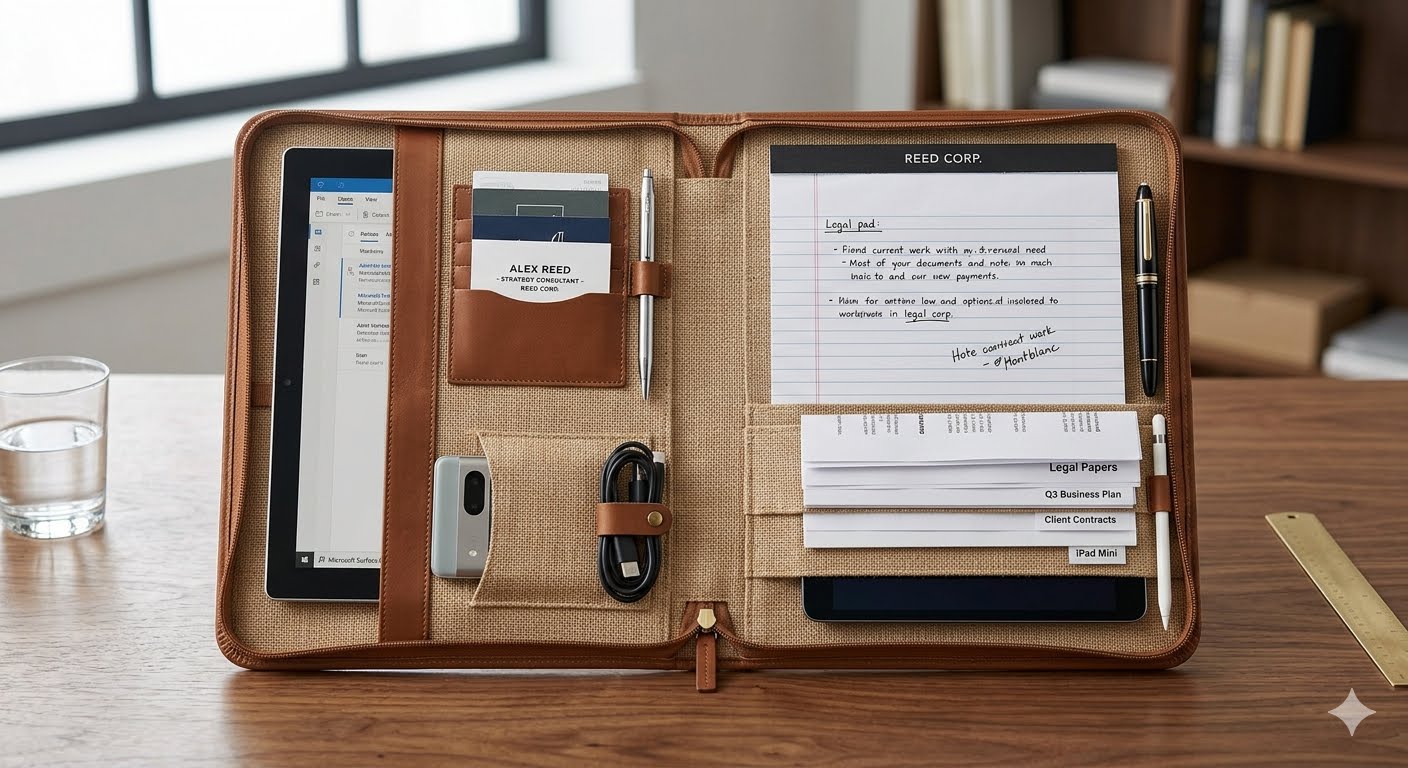
Jute is celebrated across the global corporate landscape for its incredible natural tensile strength and structural resilience. To support heavy document stacks, legal pads, and thick presentation portfolios securely without tearing, contemporary variants are meticulously engineered as multi-utility desktop toolkits. They frequently incorporate advanced, built-in interior compartments:
Main Core Compartments: Designed to keep physical documents, legal pads, contracts, or printed pitch decks perfectly flat and wrinkle-free.
Internal Canvas & Cotton Sleeves: Specialized slots designed to securely house digital tablets, smartphones, passports, or business cards to prevent hardware scratching.
Integrated Fabric Loops: Stitched pen or stylus loops that lock down writing instruments firmly, keeping ink away from core paperwork.
Upgrade Your Daily Desktop System. Move past the visual clutter and short lifecycles of mass-produced synthetic folders. Explore our resilient, long-lasting jute folder collections engineered to keep your business proposals pristine on the move.
👉 [Shop Our Heavy-Duty Jute Collection]
3. Crafting a First Impression of "Quiet Luxury"
In a crowded commercial landscape, corporate stationery acts as a silent ambassador for your organization's core ethics, attention to detail, and brand identity. Walking into a high-stakes meeting, investor pitch, or client consultation with standard plastic sleeves looks cheap and sends an unintended message of low-cost utility.
Jute folders bring a refreshing element of high-contrast texture and sophisticated, organic minimalism into executive boardrooms. The natural, un-dyed color palette of raw jute—ranging from soft cream and warm sand to a deep golden-brown—creates a sophisticated neutral base that effortlessly complements high-end office decor, modern minimalist furniture, and dark wood grains.
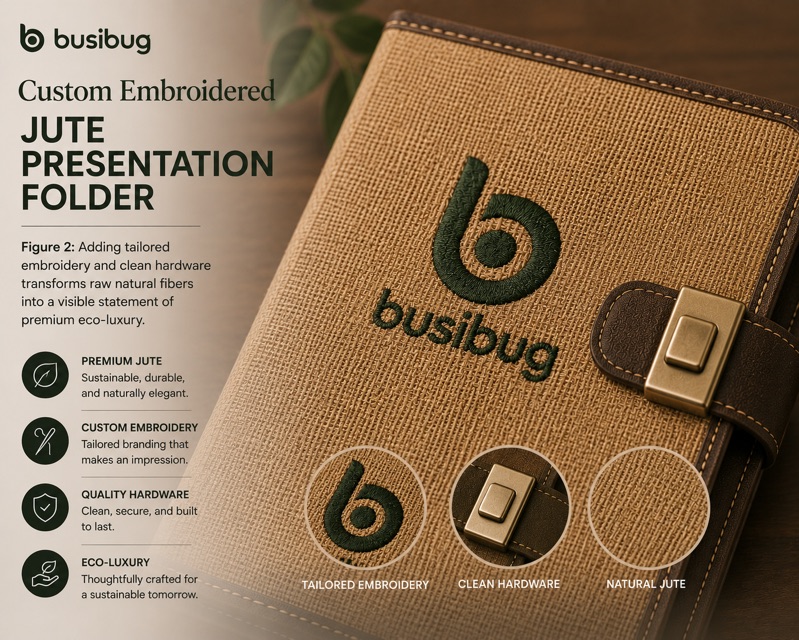
Furthermore, jute serves as an exceptional canvas for premium, personalized corporate identity. The organic fabric elegantly accommodates advanced customization techniques:
High-Density Embroidery: Tone-on-tone or contrasting thread work that embeds company names, project titles, or logos cleanly into the woven matrix.
Aesthetic Hardware Accents: Integrating custom laser-engraved wooden nameplates, secure magnetic snaps, or organic cotton loops to turn a standard document pouch into a signature piece.
Strategic Layout Elements: Utilizing eye-catching, meaningful slogans and clear contact details screen-printed with non-toxic, water-based inks directly onto the fabric.
 4. Driving the Future of Green Procurement and ESG Metrics
The growing popularity of jute folders is heavily anchored in hard environmental metrics. Modern businesses are increasingly judged on their Environmental, Social, and Governance (ESG) criteria, and procurement strategies face strict audits from green risk-management teams.
Because a single hectare of growing jute plants absorbs and sequesters approximately 15 tons of carbon dioxide from the atmosphere in just one short growing season, choosing jute directly supports carbon-negative agricultural practices. Substituting petrochemical office files with certified natural fiber products strengthens a company's official ESG rating, demonstrating an authentic commitment to a circular economy right from the desktop level.


0 Comments