Jute folders vs. traditional plastic and paper files: Discover how they compare on durability, carbon footprint, design, and workspace aesthetics.
When optimizing a corporate filing system or selecting presentation materials for high-stakes business operations, procurement teams have historically defaulted to standard office stationeries. However, as modern workplaces shift toward eco-friendly and biophilic designs, the choice of tools is being re-evaluated.
While traditional paper and plastic folders have long dominated the market, premium jute folders have emerged as a sophisticated alternative. Below, we break down the core structural, environmental, and aesthetic differences between these two organizational systems.
1. Material Composition & Environmental Impact
The most fundamental difference lies in what these folders leave behind at the end of their operational lifecycle.
Traditional Folders: Typically manufactured from petroleum-derived polypropylene (plastic) or heavily treated cardstock paper. Plastic options contribute directly to the global petrochemical waste crisis and take centuries to break down, while paper alternatives often rely on intensive chemical processing.
Jute Folders: Woven from the 100% natural, organic fibers of the rapid-growth Corchorus plant. Because jute cultivation actively sequesters massive amounts of carbon dioxide, substituting synthetic folders with jute supports carbon-negative agricultural practices. At its end-of-life, raw jute biodegrades naturally back into the soil within months without leaving toxic microplastics.
2. Durability and Structural Integrity
Investing in office supplies that withstand daily commuting reduces both long-term replacement costs and workplace waste.
Traditional Folders: Paper cardstock files fray, bend at the corners, and tear easily under the weight of thick document stacks. While plastic folders are waterproof, their seams frequently split when over-packed, and their surfaces scratch easily, making them look worn out quickly.
Jute Folders: Celebrated globally for its incredible natural tensile strength, jute is a highly resilient textile. Modern corporate jute portfolios are built to last, often featuring reinforced structural linings, water-resistant backings, and secure stitched edges that preserve a sharp silhouette even under heavy usage.
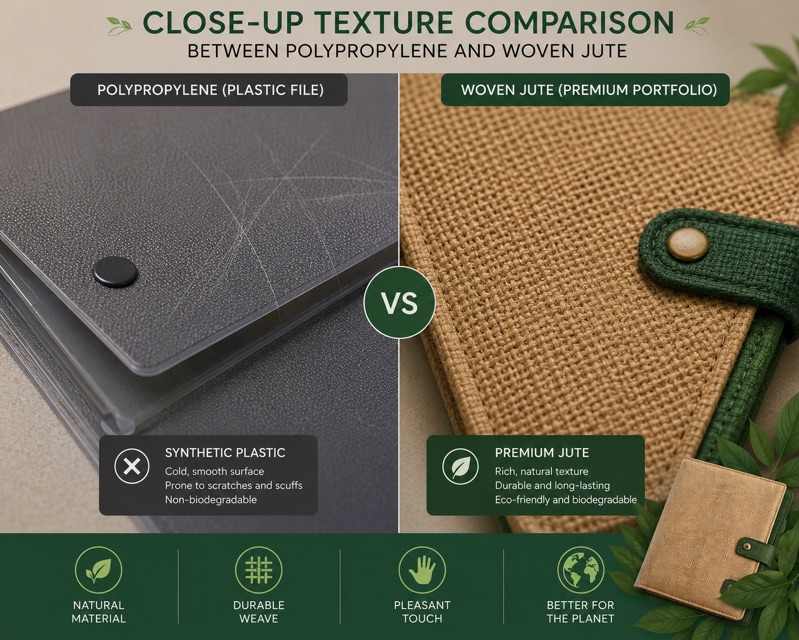
Upgrade to Industrial-Grade Durability. Stop replacing torn paper files and scratched plastic binders. Explore our resilient, long-lasting jute folder collections engineered for heavy corporate workflows.
👉 [Shop Our Heavy-Duty Jute Collection]
3. Design Functionality and Organization
How a folder manages your everyday professional gear directly impacts your daily productivity.
Traditional Folders: Standard manila or plastic sleeves generally offer a single, open pouch. They lack specialized areas, forcing users to throw loose pages, business cards, and pens into one unorganized space.
Jute Folders: Contemporary jute presentation portfolios are engineered as multi-utility desktop toolkits. They frequently incorporate built-in interior canvas sleeves, dedicated pen or stylus loops, and specialized pockets to keep digital tablets, legal pads, and business cards neatly segmented.
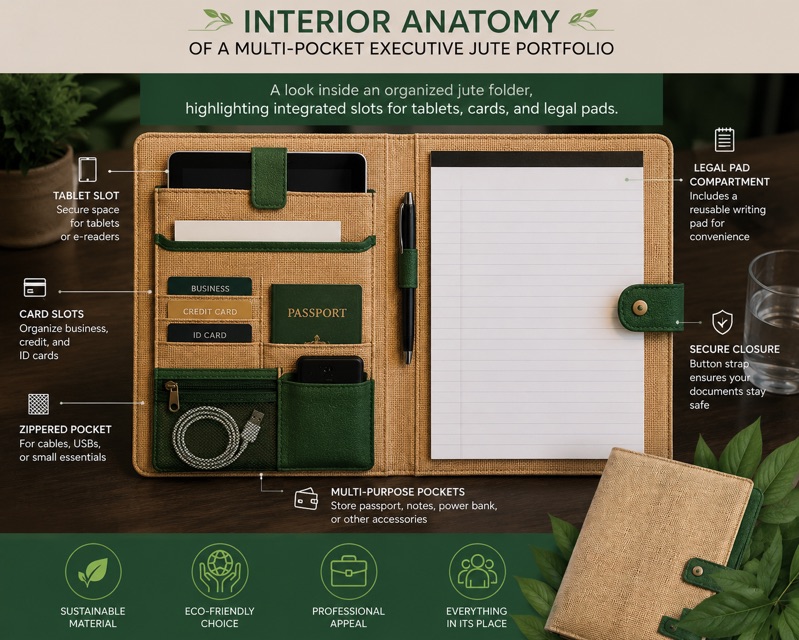
4. Aesthetic Appeal and Brand Presentation
The tools you carry act as a visual extension of your organization's identity and core ethics.
Traditional Folders: Monochromatic, glossy plastic bins and neon tabs often look clinical, sterile, and cheap. They can create visual clutter on a modern executive desk.
Jute Folders: Jute brings a sophisticated tone of "quiet luxury" and organic minimalism to office decor. Its earthy sand and golden-brown shades seamlessly complement biophilic workspaces, dark wood grains, and modern minimalist desks. Furthermore, jute serves as an elegant canvas for customized branding, accommodating high-density embroidery and laser-engraved accents.
🎯 Comparison Matrix at a Glance
Feature Traditional Folders (Plastic/Paper) Modern Jute Folders Primary Material Petrochemical Polypropylene / Cardstock
100% Natural Corchorus Fiber
Lifespan Short; prone to tearing, splitting, or scratching
Long-term; high natural tensile strength
End-of-Life Multi-century landfill waste or microplastics
Fast, completely natural soil biodegradation
Storage Layout Simple single pouch with basic plastic tabs Multi-pocket sleeves for tech, cards, and pads
Aesthetic Value Clinical, mass-produced, and utilitarian[cite: 2]
Earth-toned, texturally rich eco-luxury


0 Comments