Make an informed choice for your desk. Discover how premium jute folders compare to standard plastic files in sustainability and performance.
The modern workplace is moving away from cold, synthetic materials. For decades, standard corporate cubicles and home offices were filled with generic plastic bins, clinical metal filing cabinets, and mass-produced polypropylene folders. While these choices were built entirely for low-cost utility, they created a sterile, uninspiring work environment and generated massive amounts of environmental waste.
Today, organizations and independent professionals are embracing a more conscious design movement. Driven by a growing commitment to corporate social responsibility (CSR) and strict Environmental, Social, and Governance (ESG) criteria, teams are auditing their daily procurement logs to replace petrochemical-based supplies with circular alternatives.
If you are looking to revitalize your filing system, the choice often comes down to a classic battle of materials: Premium Jute Folders vs. Traditional Plastic Alternatives. Here is a comprehensive head-to-head breakdown of how these storage tools compare in environmental impact, workplace performance, and design aesthetics.
1. Environmental Impact: Linear Waste vs. Circular Design
The most critical difference between these two office organizers lies in what happens to them at the end of their operational lifecycles.
Traditional Plastic Files: Standard plastic sleeves, polypropylene binders, and vinyl organizers are derived directly from fossil fuels. They require energy-intensive, chemical-heavy manufacturing processes. When discarded, these synthetic files take centuries to break down in landfills, quietly shedding microplastics and harmful chemical residues into the surrounding soil and waterways.
Premium Jute Folders: Woven from the rapid-growth Corchorus plant, jute is a 100% natural, organic vegetable fiber. Jute cultivation is highly sustainable; a single hectare of growing jute plants absorbs and sequesters roughly 15 tons of carbon dioxide from the atmosphere in just one short growing season. At its end-of-life, a raw jute folder is completely biodegradable and breaks down naturally into the soil within months, leaving zero toxic traces behind
2. Workplace Performance: Utilitarian Flexibility vs. Structural Anatomy
An office tool can only be truly effective if it actively supports a professional's daily hustle. While plastic folders offer basic flexibility and light water resistance, they lack the organized structural anatomy needed by busy mobile professionals.
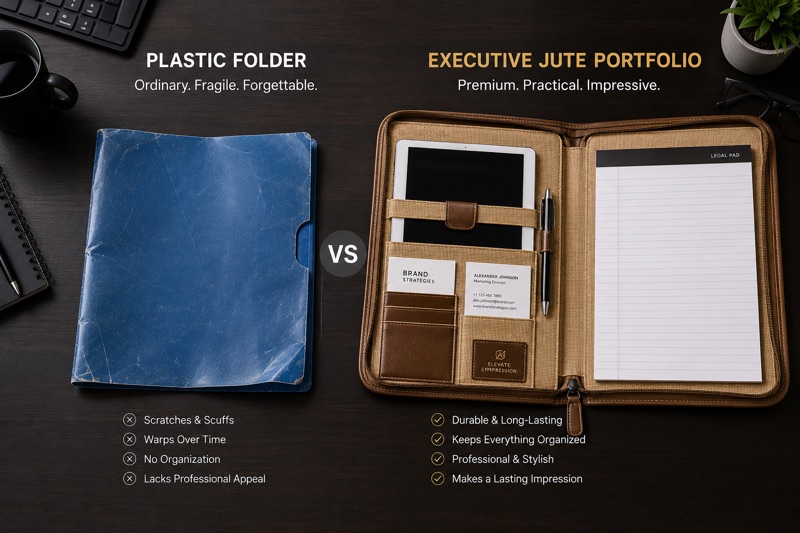
Because jute possesses incredible natural tensile strength and a rigid woven matrix, high-end executive jute portfolios are engineered as self-contained mobile workspaces. They are thoughtfully designed to keep materials completely organized throughout a fast-paced workweek:
Main Core Compartments: Built with heavy canvas or cardboard backings to keep critical contracts, legal pads, and project blueprints perfectly flat and wrinkle-free.
Integrated Tech Sleeves: Specialized interior cotton slots securely house digital tablets, smartphones, and business cards, preventing hardware scratches while moving between meetings.
Dedicated Hardware Loops: Stitched fabric bands lock down premium fountain pens or digital styluses, ensuring you never have to search blindly through a deep backpack.
Step Up to Premium Desktop Performance. Stop settling for flimsy plastic sleeves that wear down and compromise your professional look. Explore our signature collection of multi-pocket, heavy-duty jute folders built to streamline your active projects.
👉 [Shop the Executive Jute Collection]
3. Aesthetic Presentation: Sterile Utility vs. Eco-Luxury Branding
The stationery your team carries into a high-stakes client pitch or an international seminar serves as a silent ambassador for your business standards and corporate identity.
Passing over an expensive proposal inside a translucent plastic sleeve looks cheap and signals an unintended message of low-cost utility. Jute folders, on the other hand, bring a refreshing element of rich texture and sophisticated minimalism into executive spaces. The natural, un-dyed color palette of raw jute—ranging from soft sand to deep golden-tan—creates a beautiful neutral canvas that pairs wonderfully with premium customization techniques:
High-Density Embroidery: Intricate thread work sews corporate logos or project titles directly into the fabric weave for a polished, multi-dimensional finish.
Strategic Layout Details: Maximize your folder's presentation by screen-printing eye-catching, meaningful slogans and team contact information directly onto the fabric linings with eco-friendly inks.
Mixed-Material Accents: Complement the natural fibers cleanly by incorporating elegant design elements, such as custom wooden buttons, contrasting wine-colored borders, or secure magnetic snaps.
 4. Economic Value: Cheap Procurement vs. Long-Term Durability
At a first glance, traditional plastic office folders win on upfront cost, making them incredibly easy to order in massive bulk quantities. However, this calculation completely overlooks the hidden costs of short-lived office supplies.
Flimsy paper cardstocks and thin plastic folders scratch easily, bend permanently at the corners, and tear along the seams under heavy document loads. This creates a wasteful, recurring replacement loop where office managers must constantly restock inventory. Because jute features industrial-grade resilience and reinforced edge-stitching, a single high-quality jute portfolio outlasts dozens of plastic alternatives. Investing in long-lasting natural fibers allows corporate procurement teams to optimize their long-term supply costs while dramatically reducing workplace waste.



0 Comments