When it comes to managing corporate documents, presenting client pitches, or organizing large-scale event materials, the humble office folder remains an indispensable tool. However, procurement teams are facing a critical choice that goes beyond simple budgeting. Today, the choice of material—Paper, Plastic, or Jute—serves as a direct reflection of an organization’s operational efficiency and environmental ethics.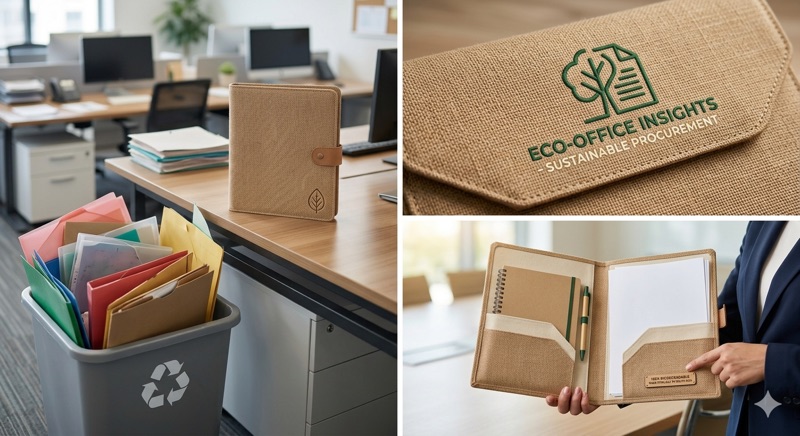
Each material presents distinct advantages and drawbacks. To help your organization make an informed, strategic decision, we have broken down how these three common folder types stack up across durability, design aesthetics, and environmental lifecycles.
The Contenders: A Side-by-Side Analysis
1. Paper and Cardboard Folders
Standard paper and cardboard folders have been the default choice for archival filing and quick presentations for decades.
The Pros: They are lightweight, highly affordable for bulk ordering, and incredibly easy to print on. Standard office printers can label them directly, making them convenient for rapid, short-term organization.
The Cons: Paper lacks longevity. It frays, tears, and crumples easily under daily handling or during commutes. More importantly, standard paper options drive intensive deforestation and require a water-heavy manufacturing process. While recyclable, they rarely survive more than a few uses before wearing out.
2. Plastic and Vinyl Folders
Polypropylene and vinyl folders became corporate staples due to their impervious nature to everyday wear and tear.
The Pros: They are waterproof, virtually unrippable, and shield documents effectively from spills and inclement weather.
The Cons: From an environmental standpoint, plastic is a disaster. Synthetic folders take centuries to decompose, contributing significantly to short-lifecycle microplastic waste. Visually, cheap and glossy plastic presentation folders are increasingly viewed as outdated, commercial, and out of touch with modern sustainable values.
3. Jute Folders (The Premium Eco-Alternative)
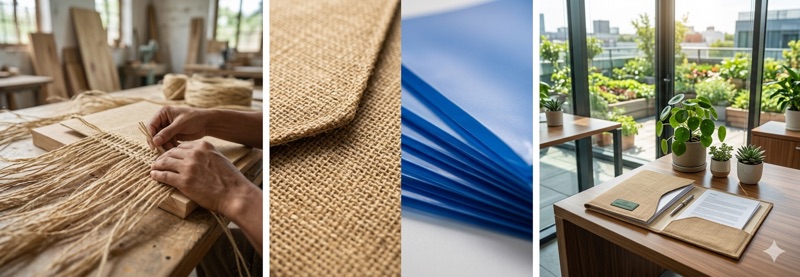
Derived from the highly resilient bark of the white jute plant, jute folders represent a rapid bridge between industrial-grade utility and environmental responsibility.
The Pros: Jute fibers possess some of the highest natural tensile strengths in the botanical world, meaning they resist punctures, heavy friction, and tearing under thick, heavy legal or presentation loads. They offer a premium, textured professional aesthetic that commands attention in boardrooms and conferences, and they easily accept high-end customized branding like embroidery or screen-printed organic inks.
The Cons: Jute portfolios carry a higher initial upfront unit cost than basic paper folders, making them an investment targeted toward reusable corporate assets rather than single-use giveaways.
Material Comparison Matrix
| Feature | Paper Folders | Plastic Folders | Jute Folders |
| Durability | Low (Tears and frays easily) | High (Waterproof and rigid) | High (Resists tearing and heavy friction) |
| Average Lifespan | Weeks to Months | Months to Years | Years (Highly reusable) |
| Brand Perception | Basic / Standard | Outdated / Low-end | Premium / Eco-Luxury |
| Decomposition | Weeks (Biodegradable) | 400+ Years (Leaches toxins) | < 180 Days (100% Compostable) |
| Carbon Impact | Driven by deforestation | High (Petrochemical-based) | Carbon-Negative (Plant absorbs $CO_2$) |


0 Comments